When it comes to building a foundation for your hot tub, the two most common options are concrete and gravel. Both have their advantages, but the right choice depends on your budget, the size of your spa, your property's drainage, and how permanent you want the installation to be. This guide breaks down the pros, cons, and installation process for each option so you can make an informed decision.
Concrete Hot Tub Pads
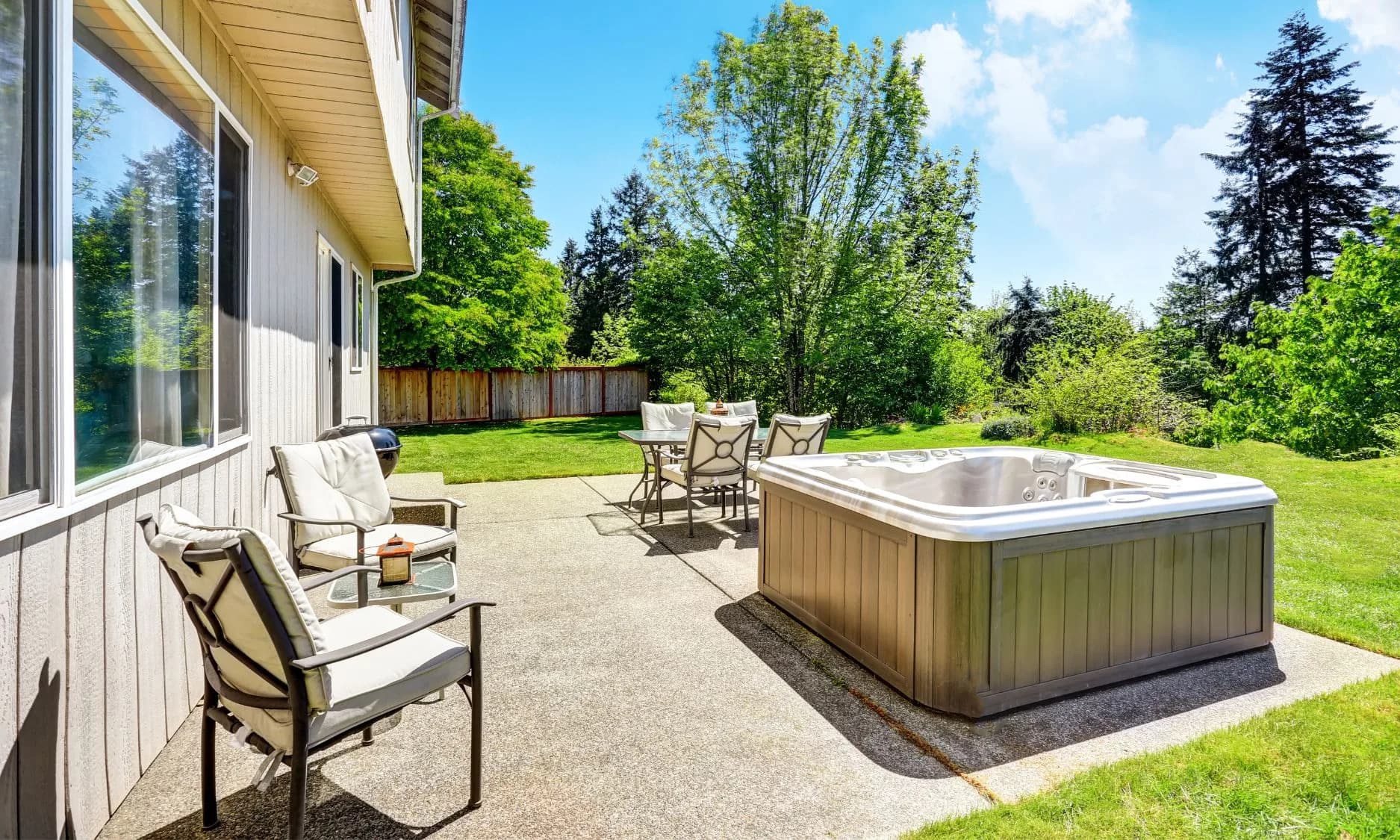
Concrete is the gold standard for hot tub foundations. It provides the strongest, most stable, and longest-lasting base for your spa — especially important for heavier swim spas and permanent installations.
Pros
- ✓Extremely durable — lasts decades with minimal maintenance
- ✓Provides a perfectly level and rigid surface that won't shift or settle
- ✓Handles the heaviest hot tubs and swim spas (5,000+ lbs when filled)
- ✓Clean, professional look with broom-finish for slip resistance
- ✓Can include embedded conduit for electrical hookup
Cons
- •Higher upfront cost compared to gravel
- •Requires 24–48 hours of curing time before the hot tub can be placed
Installation Process
- 1Excavation— Remove topsoil and organic material, excavate to the correct depth (typically 10–12 inches total)
- 2Gravel base— Lay and compact 4–6 inches of crushed gravel for drainage and stability
- 3Formwork & reinforcement— Build wooden forms, lay rebar or wire mesh, and run electrical conduit
- 4Pour & finish— Pour 4–6 inches of 32 MPA concrete, apply a broom finish, and cure for 24–48 hours
Gravel Hot Tub Pads
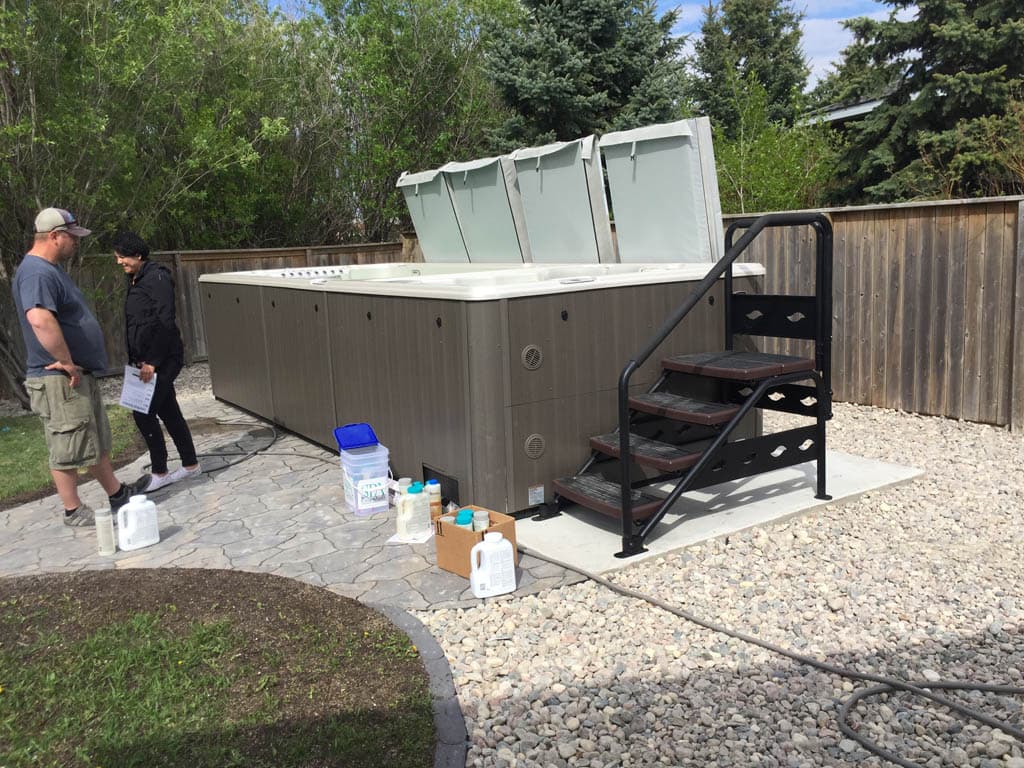
Gravel pads are a popular budget-friendly alternative to concrete. They offer excellent drainage, faster installation, and lower upfront costs — making them a solid choice for lighter hot tubs and homeowners on a budget.
Pros
- ✓Lower cost than concrete — great for budget-conscious homeowners
- ✓Excellent natural drainage — water flows through instead of pooling
- ✓Faster installation with no curing time required
- ✓Can be relocated or adjusted more easily if needed
Cons
- •May require occasional re-leveling as gravel settles over time
- •Not recommended for heavy swim spas or large hot tubs exceeding 4,000 lbs
- •Weeds can grow through without a proper weed barrier
Installation Process
- 1Excavation— Remove topsoil and dig to a depth of 6–8 inches
- 2Weed barrier & edging— Lay landscape fabric and install edging to contain the gravel
- 3Fill & compact— Add high-quality ¾-inch crushed gravel in layers, compact each layer for a flat, stable surface
Side-by-Side Comparison
| Feature | Concrete | Gravel |
|---|---|---|
| Durability | Excellent — lasts 25+ years | Good — may need re-leveling |
| Cost | Higher upfront investment | More affordable |
| Installation Time | 2 days + 24–48 hr cure | 1 day, ready immediately |
| Drainage | Requires grading for runoff | Excellent natural drainage |
| Stability | Superior — rigid and fixed | Good when properly compacted |
| Maintenance | Virtually none | Occasional re-leveling & weed control |
| Best For | Heavy spas, swim spas, permanent installs | Lighter hot tubs, budget builds, temporary setups |
Which Is Right for You?
Choose concrete if: you want a permanent, set-it- and-forget-it foundation. If you own a large or heavy hot tub, a swim spa, or you simply want the strongest base possible, concrete is the clear winner. The higher upfront cost pays for itself in decades of maintenance-free stability.
Choose gravel if:you're on a tighter budget, have a lighter hot tub, or want the flexibility to relocate the pad later. Gravel is also an excellent choice if drainage is a major concern on your property, since water flows right through the surface.
Not sure? Our team can assess your property, discuss your budget, and recommend the best option for your specific situation. We install both concrete and gravel pads and will give you an honest recommendation.
Need Help Deciding?
Contact us for a free, no-obligation consultation. We'll evaluate your property, discuss your spa requirements, and recommend the best pad type for your needs and budget.
Get a Free Quote